by Angela Balas | Feb 23, 2021 | Articles
We have discussed how Augmented Reality (AR) has many use cases in E-commerce and the shopping experience. With buying habits shifting during the pandemic, it’s easy to predict that consumers will continue to prioritize shopping from the comfort of their own homes. Businesses had to keep up with these habits by finding innovative ways to create value for their customers and remain competitive amongst the crowd.
Augmented Reality remains a unique accelerant to deliver new experiences and enhance customer engagement. However, as the landscape continues to change, we pose the question: “Are you ready to add an extra layer?”
With everything eventually becoming a computer-generated input, it is possible for people to be fearful about a world that is so personalized and interactive. This extra ‘layer’ will indeed start in the eCommerce space and then shift to encompass more and more of the world. Just like the rise of any new technology, developers will have to consider users’ expectations in all things–safety, comfort, and environment.
In an article discussing AR design, they focus on the digitalized steps in the analogue world. Essentially, design considerations for immersive technologies. In order for the populations to feel comfortable and ready for an “extra layer”, developers need to focus on these few steps:
Safety–The idea that you cannot distract the user onto a dangerous path. Objects and items in the real world should still take priority.
Hyperreality–Hyperreality is a term that’s been used more frequently as advanced technologies like Augmented Reality and Artificial Intelligence continue to rise. We define it as the inability to distinguish between reality and a simulation of reality. Developers should take this concept seriously in order to avoid drowning users’ senses.
Environment- Unlike logging onto your desktop, AR happens all around you. Developers must consider public, personal, intimate, and private scenarios. “Whatever their setting, users expect pleasurable, user-friendly experiences.”
Security- It is critical to ensure that users’ data is protected as the AR landscape takes shape.
As AR continues to evolve, developments must continue to be made to improve the quality of output of an experience for the user. There is unlimited potential for AR, as long as changes are made continuously so populations don’t feel overwhelmed and exposed by immersive technology. We’re ready for an extra layer–are you?

by Angela Balas | Feb 9, 2021 | Articles
Augmented Reality (AR) is transforming the way businesses interact with their customers. Augmented reality customer experience techniques enhance the product or service being offered. Every step of the customer journey is important for a successful business exchange. In today’s blog article we will introduce 5 ways that companies can successfully engage their customers through the use of AR.
Remove Uncertainty from Decision-Making
Determining whether a particular piece of furniture or large home appliance fits into your space used to require a fair amount of imagination. Beyond imagination, the person had to measure every dimension of their space to determine how the object would fit.
Certainly, appliance and furniture companies have been slow to transition online. Now, if these businesses implement AR, they can remove the uncertainty from the decision-making process. Using an interactive AR app, the buyer can now virtually position an object into their space to visualize the furniture in their home ahead of time. Because AR combines the virtual image with the physical world, the customer can get an accurate depiction of what it will look like– with their wall color, other furniture, and size of the room.
Interactive Packaging
Using immersive technology, like AR, companies can create an interactive customer experience. Brands like Heinz Ketchup have begun AR-ifying their ketchup bottles– offering recipes and food options to go along with the ketchup.
Imagine, other brands catching up to this technology. Soon enough, you will take out your cereal for breakfast and find an interactive game on the box. We will see consumer engagement like never before, thanks to AR.
Try Before You Buy
Beauty and retail companies alike have begun to implement AR to enhance the buying experience. Shopping for apparel or makeup can be tricky online. Much like furniture, you can’t tell what the product will look like on you until you try it on at home. AR solves some of these problems. Sephora Virtual Artist AR app allows customers to virtually try-on makeup items– like lipstick or mascara. Gap’s Dressing Room also uses AR technology to make shopping easier. Enhancing sales through visual engagement is key– especially if the beauty and retail industry wants to make a strong online presence.
Customer Self- Service
Finalize the buying process and the customer has your product in hand. However, the process isn’t over yet, there are still crucial steps to ensure customer satisfaction and guarantee they will return. Using AR, the customer can bypass customer service staff altogether. Using self-service support, the customer has access to resources such as an FAQ page or a virtual overlay for how to assemble a product. Companies will have fewer calls and consumer satisfaction will increase.
AR user manuals
To maintain and resolve any faults, user manuals come in handy– but not when they are bulky and confusing. Now, with the advent of AR, companies can offer an AR-based user manual that makes it easier to follow instructions and complete the desired task. In fact, Hyundai has already begun doing so.
As AR matures, we will continue to see how it will impact different fields and improve the customer experience. AR apps and other solutions are becoming more widespread as online buying continues to increase.
What are some other uses of AR in the e-commerce space that you see trending?

by Angela Balas | Jan 29, 2021 | Articles
The way patients and doctors interact hasn’t changed in quite some time. In general,, patients schedule an appointment, meet with the doctor in person, and leave with a diagnosis and a treatment plan. Although telemedicine began in the late 1960’s, there were extensive barriers standing in the way of widespread adoption– such as financial, regulatory, and technological challenges. Today, digital health is quickly advancing and the market is expected to reach $536 billion by 2025. Hospitals and doctor offices throughout the US are adopting innovative technologies to improve patient healthcare.
AR and VR healthcare platforms are popping up everywhere. For example, companies like XRHealth connect patients and clinicians while leveraging emerging technology. The XRHealth AR and VR platforms strive to treat patients in a fun and engaging way. For health issues like chronic pain, physical therapy, or ADHD– the platform has found a way to improve quality of life remotely. By giving patients access to a clinician and the correct tools to take their health into their own hands, immersive telehealth is transformative. Soon, other startup companies will follow in their lead with the realization that XR technology will continue to disrupt healthcare.
AR technology can improve the overflow of patients in the ICU or hospital. Patients in senior living facilities geographically distanced locals, or those with compromised immune systems can avoid the hospital by using AR telemedicine to receive quality care. According to Michael Freeman, AR and XR will play a front-and-center role in patient care. He goes on to reiterate, “Patients can be given an XR set so they can see their healthcare workers, receive the face-to-face human connection they need to feel safe and understand more about what is happening to them, all while being monitored and clinically checked remotely by the healthcare professional.
When hospitals have limited resources and space for patients, telemedicine can fill in the gaps. Not only that, but AR and VR can mimic patient care in real-time. Rather than communicating with a doctor via a computer screen or laptop, the patient can utilize their VR headset to communicate with a physician as they would in person. Emerging technologies have the potential to help deliver better medicine and give people access to accurate medical assessments and treatments that they otherwise would not have had before.
We can continue to explore beneficial use cases for augmented reality and similar technologies– but serving others from geographically distanced locations is a huge advantage of deploying such technologies. For instance, researchers who were part of Purdue University and the Indiana University School of Medicine demonstrated the use of telemedical augmented reality for emergency situations. Remote clinicians or surgeons can use an AR headset to guide military personnel or paramedics in how to perform emergency procedures. Although this system is still a prototype, it highlights the vast possibilities for AR and VR in digital medicine.
If immersive technologies can help improve healthcare and speed up the process for getting accurate and informative medical attention, why would we not do our best to support its progress?
What do you think?

by Angela Balas | Jan 26, 2021 | Articles
Augmented reality (AR) is still a fresh term in many people’s minds– but that doesn’t mean it’s not already making an impact. AR is predicted to disrupt various industries with e-commerce and retail being one of the largest. In fact, according to a recent report, “71% of shoppers would prefer to go to stores with a “try-it-before-you-buy” AR experience.”
The COVID-19 pandemic amplified the growing shift from brick and mortar businesses to digital commerce. An important lesson that may have come out of 2020, is that every business must be digital. In fact, there has been a 129% year-over-year growth in US and Canadian e-commerce orders as of April 21st and that trend is likely to continue. However, retail businesses struggle with presenting products without the physical object in store like before. Not only that but businesses that sell larger or more unique products– like furniture or jewelry– are having issues with product imagery.
The solution to change and a new landscape? Adaptation– via emerging technologies like AR.
AR is powerful because it will merge the gap between the physical and the digital worlds. Small businesses who implement AR will no longer have to worry about how they are going to showcase their products without a physical storefront.
One of the biggest issues to successfully selling larger items online is the customer’s fear that the item won’t fit or look good in their space. Additionally, as a consumer, being able to observe small details or features on the item can be crucial before making a final decision. Popular stores like Lowes have already found a way to work around that problem by giving their customers access to AR. Potential buyers can now see what their new grill will look like in their backyard– without ever leaving their home. And this is just the beginning for AR in the online retail space.
Many companies are beginning to take advantage of technologies to assist with product visualization. Using augmented reality, a consumer can get a full-sized, 3D realistic view of what a product will look like. Businesses have a once in a lifetime opportunity to embrace the new way people are going to buy in the future. By incorporating augmented reality onto their platform they will be much more successful. AR will transform the customer experience for the better– and small businesses who are looking to maintain a competitive edge should understand the power of AR.
Before the blink of an eye, we will see the way AR will transform and disrupt the retail sector. 2020 is only the beginning of a massive trend towards augmented reality, AI, and other immersive technologies.
What trends do you expect to emerge this year?

by Angela Balas | Jan 18, 2021 | Articles
Online businesses and retailers alike have tried to find ways to attract customers and ultimately lead them to a buying transaction. Online shopping is continuing to trend upwards, as the accessibility of smartphones and devices is greater than ever before. With that said, emerging technologies, like augmented reality ( AR) will make a huge impact on buying decisions and create a massive influence on consumer behavior.
The secret to good marketing is understanding your buyers behavior. In today’s competitive environment, organizations are attempting to discover more innovative ideas in order to support their offerings. Because of more competition on the internet, it is more difficult to capture the customer’s attention. By focusing on appealing the customer through content delivery and engagement– brands can be more successful.
One main aspect of consumer psychology is brand engagement. Consumers that shop online typically have increased commitment to a brand and are more involved in their success and failures. With that said, the more brand engagement someone has, the more incentive they have to buy their products. Per a scientific study done by Bahria University, “ AR impacts consumer brand engagement and purchase intention.” One main reason behind this evidence is that AR allows for insight of a product a brand offers with full reviews, dimensions, and advantages.
Because there are so many different options out there, buyers are often skeptical before purchasing. The majority of consumers hope to receive the greatest information possible before agreeing they are making a smart buying decision. Augmented reality is the perfect solution to the information deficit.
Soon enough, the days of simple photos and video will be over– in comes augmented reality– to give buyers the ultimate product experience. In fact, in an article by SmartTek, they point out that augmented reality influences a person’s pleasure receptors and their willingness to move towards a goal. Thus, AR interaction elicits a positive effect on the buyer leading them to the final goal– a sale.
The article continues to explain the gap between intention and actual purchase. As mentioned, there is skepticism. Especially with retail and clothing, consumers are unsure of sizing and how the piece will look on their bodies. If AR is implemented, the client can virtually try on the product. “Augmented reality marketing virtually puts the product in the prospect’s hands, allowing them to explore it and form their own conclusions on its benefits and quality.”
Overall, leveraging the power of augmented reality will lead to more conversions and better product insight. Consumers won’t have to guess that your product is superb, they will know. Brands that don’t start to switch over to AR technologies will be left behind as others unlock the vast potential of this new technology.
by Angela Balas | Dec 22, 2020 | Articles
With 2021 approaching quickly, it’s time to wrap up the developments that took place this last year and predict what 2021 will bring. These past 12 months proved that emerging technologies, like augmented reality, will indeed become a booming market in the near future. It’s no wonder tech giants, like Apple, are exploring AR wearables and other ways to profit from advanced technologies. In this week’s blog we’re here to provide 5 predictions for AR in 2021.
Marketing and Advertising will continue to take advantage of AR
Lenses like the ones used in Snapchat, have become a means for paid distribution and brand sponsorship. Interactive filters like chips falling from the sky or lipstick try ons are just a few of the types of lenses you’ll see on social media. According to ARtillery’s global forecast report, the current spending of 1.4 billion is projected to grow to just over 8 billion by 2024. As 2021 begins, Facebook, Snapchat, and even Tik Tok will find ways to integrate AR into their platforms to make for an engaging user experience while also feeding advertisers.
AR glasses will become more accepted
Zuckerberg, Facebook’s CEO, mentioned the company is planning to release its first pair of AR glasses in 2021. Per Venturebeat, “Zuckerberg confirmed that it has been working with fashion eyewear company EssilorLuxottica to create the “smart glasses” product and suggested that it will be cosmetically appealing, arriving under the Ray-Ban brand name.”
With more enterprise adoption of AR– for uses like safety, training, and task completion– AR glasses already had less resistance than years before.
Spatial computing will become a trend in 2021
Spatial computing is known as, “ the digitization of spatial relationships between objects, people, machines, and environments to optimize their interactions. Throw augmented reality into this mix and you have an even better application of spatial computing. There are many use cases for this– specifically for indoor navigation and GPS.
The AR cloud will materialize
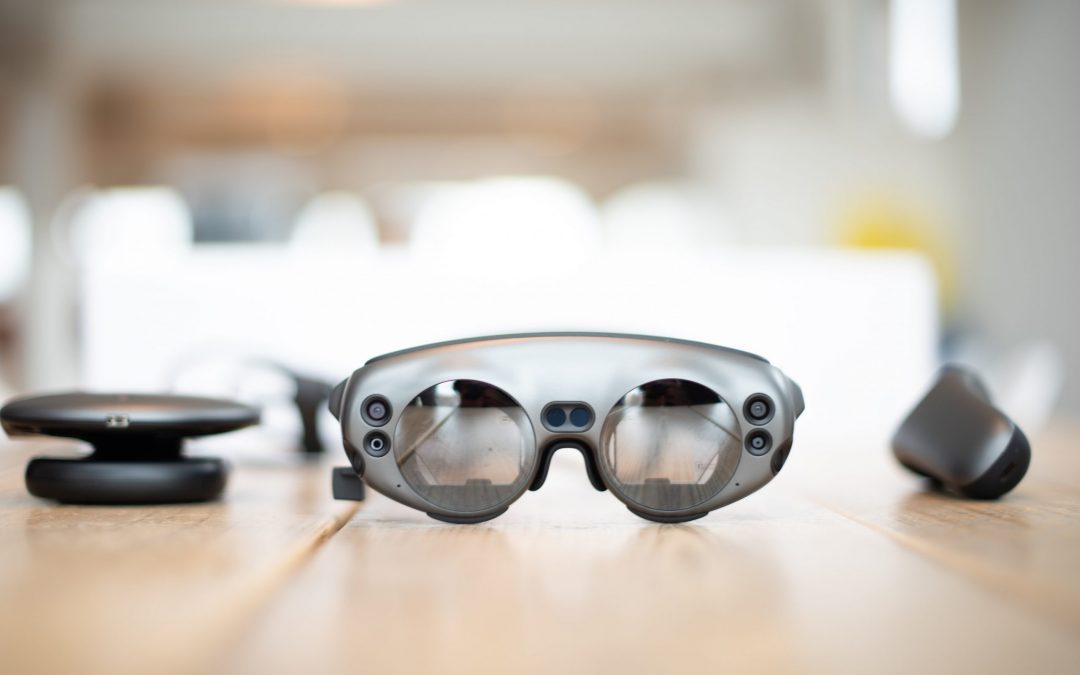
Although, there is nothing concrete to exist of the AR cloud, there are developments in place to build an interoperable spatial computing technology. In fact, ARinsider makes note that Google has AR cloud ambitions, which is evident in its interlocking spatial computing efforts. Additionally, MagicLeap released its idea to build AR “layers” over the entire earth. Therefore, we will continue to see the evolution of the cloud in 2021.
Wearables and Auditory AR will make headway
Airpods, Alexa, and audible technologies were on the rise this year. The population seems to feel more comfortable with wearable technology– meaning big companies will want to implement more sensory technology in the next year. Headphones could shift to AR headsets as people become more acclimated to sensory augmentation.
Clearly, we only scratched the surface of how AR may mature in the next year. However, as digital technology trends upwards this year, there is hope that we will continue to be baffled yet elated by the progress made in the AR space.
What are your predictions for AR in 2021?
