by Angela Balas | Aug 5, 2020 | Articles
The Digital Native– a term first coined by Mark Prensky in 2001– to describe the generation of people who have grown up in the digital age. Well, me being a 22-year-old college graduate, I fit into this description perfectly. I decided to do a short series where I am going to explore the monumental rise of technology from my perspective– and other “digital natives” who I work alongside with.
Yes, it’s true, I don’t quite remember a time without computers. However, I remember the hassle of dial-up internet and extremely slow speeds. My parent’s home office computer was the size of a dinosaur– I may be exaggerating a bit– but you get the point. Using the internet was not even worth it at times. As 6th grade came around, I was uber jealous of my friends who were allowed a cell phone– with the most basic calling and texting functionalities. I, on the other hand, still had to call my friend’s home phones and politely go through the parent who picked up on the other side.
Then came the rise of Apple. I distinctly recall being able to switch from my hand-held CD player to an iPod shuffle, and I was ecstatic. The idea of having my music all in one place was amazing. One of my top requests on my birthday that year was an iTunes gift card. As each song costs $1.29, I was very wise about my selections. In 2009, Apple released the newest version of the iPod Nano, with the biggest screen yet. Obviously, this was the start of Apple’s big takeoff. Eventually, I got hold of the iPod touch and a phone of my own. I shared my phone plan with the rest of my family, so I had a limited number of texts I could send before we were charged extra. My iPod touch made it easier for me to text my friends on wifi– with no extra charge, I felt like I had the world at my fingertips.
It is fascinating to look back at my childhood and grasp the way technology changed so quickly. Many people may look back and wish they had invested in Apple or any of the other “Tech Giants” at the time of their rise. Needless to say, it seems like we are at another turning point for breakthrough technologies. Ten years ago, if you would have mentioned artificial intelligence to anyone in the room, they would have thought you were referencing a sci-fi movie. However, today, Alexa has already proven the power of artificial intelligence. Mixed realities– such as AR and VR– are likely to be just as significant as the rise of computers.
As businesses, colleges, and healthcare systems all begin to embrace immersive technology, my life and future career has the potential to look much different than generations before me. It is both daunting and exciting. Yet–as a digital native– it can’t be too anomalous, can it?
by Angela Balas | Jul 29, 2020 | Articles
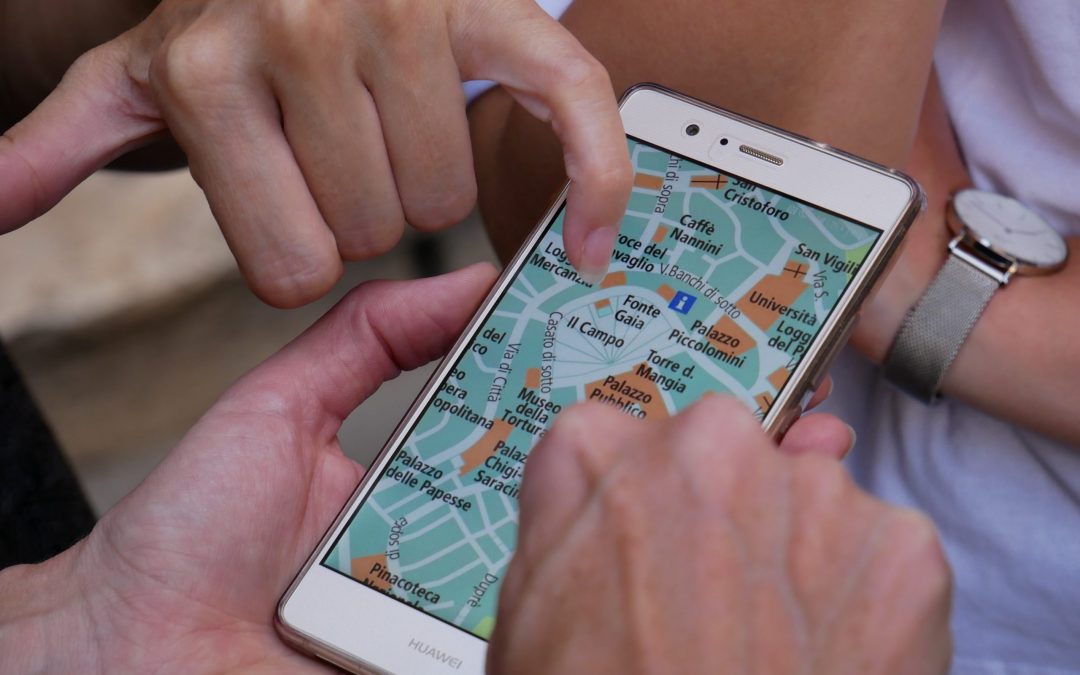
Museums, healthcare facilities, and airlines are all beginning to take advantage of AR digital wayfinding. Wayfinding– which refers to the process or activity of ascertaining one’s position and planning and following a route– can be useful in many situations.
We have all dealt with frustrations in navigating our way to a destination–sometimes with a time crunch– to only wish we had more useful tools to help. For example, when traveling in a foreign country, one may need to board their next flight in a timely manner. Navigating through an unfamiliar airport can be intimidating– especially with signage in a different language. Thus, forcing someone to rely on airport personnel for information and assistance.
As current technology continues to expand, AR wayfinding can improve the experience of navigation forever. In an article by Mobiddiction, it is revealed that Augmented Reality wayfinding is more reliable than GPS. The article points out that, “ The AR system is so precise it can guide users to a distant gate in a busy airport or even a specific bed in a vast medical facility complex.”
We see new companies being developed such as Visualix that utilize AR cloud wayfinding technology to make business and visual asset management easier. For utility workers that need assistance in tracking assets and a better understanding of their surroundings, 3D wayfinding is a plausible solution.
As written in the article, “Beyond improving finding your way around supermarkets, galleries, museums, conferences and more, AR can also improve accessibility for visually impaired users by providing turn-by-turn audio prompts.” The brilliant combination of audio and visual overlay creates an elite navigation system that assists all sectors of the community.
Assistive technology, such as AR wayfinding, can extend our abilities to understand the world around us. Per Mobiddiction, over 75% of smartphone owners regularly use navigation apps. Therefore, why not transform the existing navigation system to make it more efficient, safe, and engaging. It is exciting to think about the vast opportunities for augmented reality to become a part of our daily lives. Just as getting around the city was more difficult before Uber, we may look back and remember how grueling indoor navigation was before Augmented reality.
What do you think? Feel free to leave any comments below!
by Bob LaBelle | Jul 22, 2020 | Articles
It is interesting to look at the impact of global and local crisis on technology progression and adoption. Right now we see how the pandemic is accelerating technology transformation. We see it in our daily lives—individuals and enterprises alike—as we rely on a collection of technologies and platforms to stay connected, perform our jobs, continue education and more. There has been a huge pivot to remote working, learning, healthcare, banking, etc. We were already on the digital transformation journey, but out of necessity (not to mention to stay competitive, relevant, connected and engaged) people are even more so becoming increasingly reliant on websites and applications for critical services, entertainment, work, and learning. This will have a long-term impact on how we use technology and what new or emerging technologies—AI, edge computing and AR—will be boosted and put into the field more quickly.
Immersive technologies like AR—which enhance our physical world—could be used to enhance virtual learning and training, enhance virtual conferences and events and increase consumer confidence in online purchasing decisions that are not only needed in our current world situation, but beyond as accepted and an expected part of our daily technology stack. As we look for alternative ways to work, learn and play, there is tremendous opportunity for AR to provide an immersive experience we choose vs what we need.
In doing some desktop research on how crisis catalyzes technology use and in the context of the current pandemic, I learned that (no surprise) video conferencing provider growth exploded. Zoom for instance became a household name and by April had 300 million users a day—up from 10 million before the pandemic. And Instacart for grocery delivery saw sales of $700 million per week—up 450% since December 2019. In the AR space, Mojo Vision—a startup that is working to bring AR contact lenses to the world, did a study in June that noted that 95% of respondents reported their attitudes toward technology became more positive as a result of the pandemic. And 42% of consumers in the early majority group—who typically wait for a tech product to become popular—indicated that the pandemic sped up their adoption of technology and 48% said they were likely or somewhat likely to continue to buy or try new devices and technologies sooner rather than later.
AR and immersive technologies aren’t necessarily new or futuristic. They are fully developed technologies that are reliable and impactful. A challenge to their widespread adoption was exposure, familiarity and an impetus—which we now have. Time will tell if the interest, uptake and demand will last and expedite AR’s use and deployment. Maybe we all have an early-adopter within us that is willing to take the leap to learning about and using different or new technologies—that collectively will drive a transformation of technology in our daily lives. But I tend to think that post the pandemic and measures being taken to prevent spread, the behavior change it fueled will last.
What do you think?
Rob LaBelle
by Angela Balas | Jul 1, 2020 | Articles
The COVID-19 outbreak challenges businesses across the world and forces them to realize the importance of information technologies. With restrictions, such as social distancing, inability to travel, and disrupted supply chains, companies must adapt. Per a survey done by Grid Raster, 56% of businesses have implemented some form of AR/VR technologies, and another 35% are considering doing so. With COVID-19 accelerating the adoption of other online services, such as zoom, enterprise AR is the obvious next step.
As mentioned in a recent article from the AREA, “Augmented Reality can help mitigate the business impact while supporting business continuity through the pandemic.”
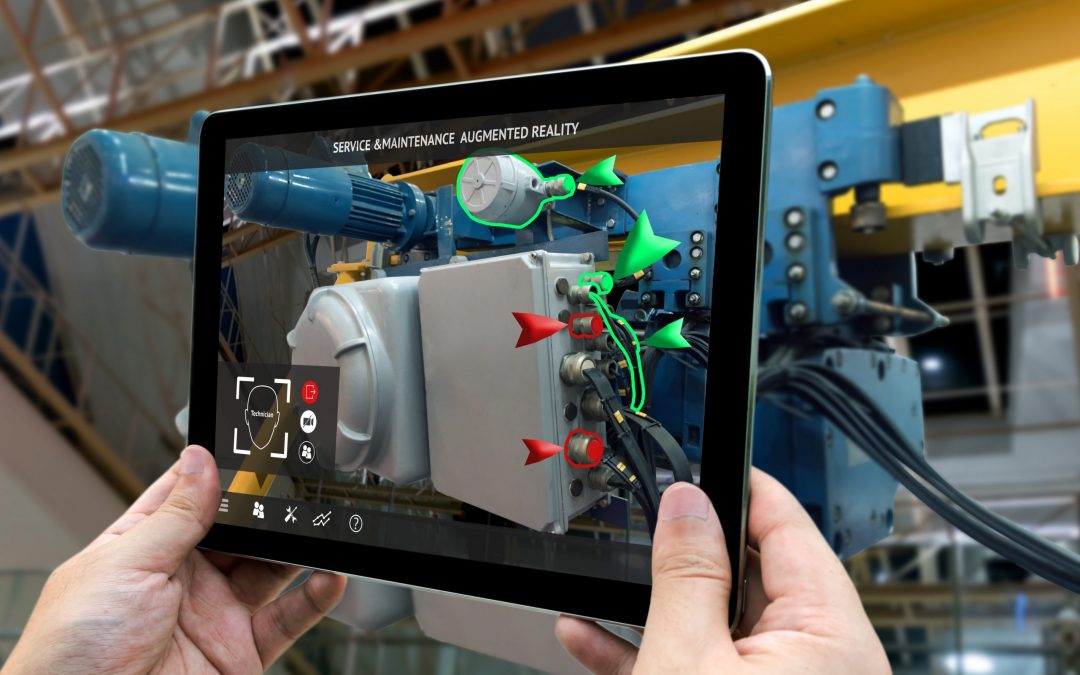
For the utility industry, social distancing can be especially difficult. Frontline workers may not be able to go on-site and maintain issues. This is where technologies such as AR-enhanced remote assistance come into play.
According to Sarah Reynolds, “AR-enhanced remote assistance enables product experts to connect with on-site employees and even end customers to offer them contextualized information and expert guidance, helping them resolve these issues quickly and ultimately reduce downtime. AR-enabled remote assistance marries the physical and the digital worlds – allowing experts and front-line workers to digitally annotate the physical world around them to improve the clarity, precision, and accuracy of their communication and collaboration.”
Similarly, AR can provide assistance to healthcare workers who need medical training or help with equipment changeover. AR-enhanced methods reduce human error – and streamline the otherwise complicated learning process.
As pointed out by the AREA, AR supports remote collaboration. “AR enables users who are physically separated to be able to “inhabit” a shared virtual space, distributed by the AR application.” Although organizations are utilizing video conferencing software, AR is the missing puzzle piece. With many people working from home, one crucial element is missing: collaboration. It is difficult to share information and communicate without face-to-face interaction. By taking advantage of AR, businesses can expand and thrive in the COVID-19 pandemic, and in the future to come.
How do you think COVID-19 will shift the use of digital technologies? Will Augmented Reality fill in the missing pieces for enterprise and e-commerce companies? Leave your thoughts below!
